

LE GALLERIE DEGLI UFFIZI
Piazzale degli Uffizi, 6
Part of the Gallerie degli Uffizi museum complex are the Uffizi, Palazzo Pitti, the Giardino di Boboli, and the Corridoio Vasariano.
The Uffizi, built between 1560 and 1580 to a design by Giorgio Vasari, is among the most important museums in the world for its extraordinary collections of ancient sculptures and paintings spanning from the Middle Ages to the modern era. Its collections of 14th-century and Renaissance paintings include some of the greatest masterpieces in the history of art. Just think of names such as Giotto, Simone Martini, Piero della Francesca, Beato Angelico, Filippo Lippi, Botticelli, Andrea Mantegna, Correggio, Leonardo, Raphael, Michelangelo, Caravaggio, Dürer, Rembrandt, and Rubens.
The Uffizi also boasts a valuable collection of ancient statues and busts from the Medici family, which adorn the corridors and consist of ancient Roman copies of lost Greek sculptures.
The Uffizi are located on the top floor of the grand building originally conceived as the seat of the main administrative offices of the Tuscan state. It was commissioned by Grand Duke Francesco I and enriched through the contributions of numerous members of the Medici family, passionate collectors of paintings, sculptures, and works of art. The museum was later reorganized and expanded under the Lorraine dynasty, successors to the Medici, and subsequently by the Italian State.
The Vasari complex also houses other significant collections: the Contini Bonacossi Collection and the Uffizi Prints and Drawings Department.
Purchased in 1550 by Cosimo I de’ Medici and his wife Eleonora of Toledo to transform it into the new grand ducal residence, Palazzo Pitti soon became the symbol of the consolidated power of the Medici over Tuscany. A royal palace of two further dynasties—the Habsburg-Lorraine (successors to the Medici from 1737) and the House of Savoy, who lived there as Kings of Italy from 1865—Palazzo Pitti still bears the name of its first owner, the Florentine banker Luca Pitti, who in the mid-fifteenth century had it built—perhaps to a design by Brunelleschi—beyond the Arno, at the foot of the Boboli hill. Today it houses five different museums: the Treasury of the Grand Dukes and the Museum of Russian Icons, with the Palatine Chapel, on the ground floor; the Palatine Gallery and the Imperial and Royal Apartments on the piano nobile; and the Gallery of Modern Art and the Museum of Fashion and Costume on the second floor.
Behind Palazzo Pitti stretches the magnificent Giardini di Boboli. The Medici were the first to oversee its layout, creating the model of the Italian garden that became exemplary for many European courts. The vast green area, laid out in a regular manner, constitutes a true open-air museum, populated with ancient and Renaissance statues, adorned with grottoes—first and foremost the celebrated one created by Bernardo Buontalenti—and large fountains, such as those of Neptune and Oceanus. The subsequent Lorraine and Savoy dynasties further enriched the layout, expanding its boundaries along the ancient city walls as far as Porta Romana. Of notable visual appeal is the terraced area where the eighteenth-century Kaffeehaus pavilion stands, a rare example of Rococo architecture in Tuscany, as well as the Limonaia, built by Zanobi del Rosso between 1777 and 1778. A visit to Boboli completes that of the Palazo Pitti, of which it is an integral part, allowing visitors to fully grasp the spirit of court life while enjoying the experience of a garden that is constantly renewed while respecting its tradition.
The Corridoio Vasariano, an elevated passageway built by Vasari in 1565, connects the Uffizi building with Palazzo Vecchio and Palazzo Pitti. It contains important collections of 17th-century paintings and a remarkable series of self-portraits.
Corridoio Vasariano
Lungarno degli Archibusieri, FI
Giardino di boboli
Piazza Pitti, 1
Behind Palazzo Pitti — which served as the residence of the Grand Dukes of Tuscany for nearly four centuries and, for a brief period, of the Kings of Italy — stretches the magnificent Boboli Gardens. The Medici were the first to design and develop them, creating the model of the Italian-style garden, which became a reference for many European courts.
This vast and geometrically arranged green space is a true open-air museum, adorned with ancient and Renaissance statues, grottoes — foremost among them the celebrated one designed by Bernardo Buontalenti — and grand fountains such as those of Neptune and Ocean.
The subsequent Lorraine and Savoy dynasties further enriched and expanded the gardens, extending their boundaries along the ancient city walls as far as Porta Romana. Particularly striking is the terraced area featuring the 18th-century Kaffeehaus pavilion, a rare example of Rococo architecture in Tuscany, as well as the Limonaia, built by Zanobi del Rosso between 1777 and 1778.
A visit to Boboli completes that of the Pitti Palace, of which it is an integral part, allowing visitors to fully experience the spirit of courtly life while enjoying a garden that continually renews itself in harmony with its historic tradition.
PALAZZO PITTI
Piazza Pitti, 1
Purchased in 1550 by Cosimo I de’ Medici and his wife Eleonora of Toledo to transform it into the new grand ducal residence, Palazzo Pitti soon became the symbol of the Medici’s consolidated power over Tuscany. The palace later served as the royal residence for two other dynasties — the Habsburg-Lorraine (successors to the Medici from 1737) and the Savoy, who lived there as Kings of Italy from 1865 to 1919.
Palazzo Pitti still bears the name of its first owner, the Florentine banker Luca Pitti, who commissioned its construction in the mid-15th century — possibly designed by Brunelleschi — on the opposite side of the Arno, at the foot of the Boboli hill.
Today, the palace houses four different museums: the Treasury of the Grand Dukes on the ground floor; the Palatine Gallery and the Imperial and Royal Apartments on the main floor; the Gallery of Modern Art; and the Museum of Fashion and Costume on the second floor.
Related product
-
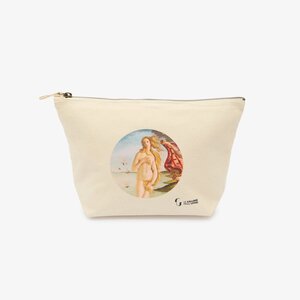
VENUS COTTON POCHETTE
€10,50 -
DRAWSTRING BAG VENUS
€12,90 -
DRAWSTRING BAG MEDUSA
€12,90 -
BACCHUS NOTEBOOK
€9,90